
Culture Shock has become a big buzzword in the world of travel lately. It’s got many people reaching out to Google and asking, “What exactly is culture shock?” Well, look no further. Today we’re diving into what it is and how to deal with it from the point of view of someone who’s gone through the cycle many times.
If you choose to move abroad to teach English and/or do your TEFL course abroad, you’ll need to navigate through the different stages of culture shock. Culture shock is unfortunately unavoidable no matter where you’re from or what language(s) you speak. Especially if you’re moving to a new and unfamiliar country. Some people move through the stages of culture shock quickly. Others not so much. It really depends on you and your effort.
Culture shock is what everyone who moves abroad experiences after leaving the familiarities of their home culture to live in another cultural and social environment. Even those who are open-minded and well-travelled are not immune to culture shock.
Some of the symptoms you might experience when dealing with culture shock include:
- Anger
- Boredom
- Hostility
- Irritability
- Loneliness
- Impulsivity
- Stereotyping
- Mood swings
- Homesickness
- Excessive sleep
- Obsessive compulsion
- Glazed stare/blank brain
- Getting “stuck” on one thing
- Physiological stress reactions
- Desire to connect with familiarity
- Excessive concern over cleanliness
- Feelings of helplessness and withdrawal
- Compulsive or irregular eating and drinking
Everyone will experience some or all of these symptoms to some extent and it’s different for every individual who travels abroad. Luckily, the team at Destination TEFL has been through all of them, and we’ve got some great advice to hand out. For free!
How to Proactively Deal With the Symptoms of Culture Shock.
Before you leave home, try to learn as much as possible about your new destination and culture. While you’re learning, attempt to remain in a positive, curious, and open-minded frame of mind. Developing this type of mindset before you leave will make it easier to adapt to a new culture and see things from a different perspective. Sliding into a judgemental, stressed-out, and perfectionist mindset will only make things worse. Trust us – we’ve helped hundreds of students in these shoes before.
If you understand why different people do things the way they do and how it’s easier to adapt once you get there. And of course, having a positive attitude can make all the difference. That’s a no-brainer. A positive mindset goes with anything in life but is especially true when travelling and interacting with new people in new surroundings. It’s all about riding the emotional wave of life while staying on the surfboard of positivity. (So cheesy, we know, but it works!)
View Your Situation From the Outside Looking In
After you’ve arrived in your new home country and taken some time to settle in, you’ll want to make an attempt to view your situation from the outside looking in. Understand from an objective point of view what you are going through and what you are feeling. Write it down if you have to.
If you find yourself struggling to get comfortable, dig into exactly what you might be having trouble with. Know that it’s okay to struggle with those things and then put in a little work to understand them.
Here’s a list that might help you out. Maybe you’re struggling with:
- Different attitudes
- Different lifestyles
- A different climate
- Different cultural values
- Unfamiliar surroundings
- Different religious beliefs
- People who look different than me
- Different political beliefs and systems
- Language and communication barriers
- Something else perhaps? If so, what is it
Get curious! Identifying what’s unfamiliar to you and why it might make you feel uncomfortable will help you to tackle culture shock much easier than those who don’t put in any work to overcome it.
Once you understand what you’re struggling with, the next step is to accept and adapt to your new culture. Just because something is different, doesn’t mean it’s wrong. Learn to do things the way the locals do. After all, they’ve been living there a lot longer than you have. Oftentimes, you’ll find that learning new ways of doing things might make life a lot easier and more comfortable based on where you’re living.
When life in your new country gets stressful and hard to cope with (and believe us, it will), remind yourself to keep going and reach out for help when you need it.
Find Your Personal Balance of Time
This piece of advice is a bit of a double-edged sword that requires balance on your part. You need to stay in touch with those close to you back home as a source of support. But, you also shouldn’t spend all your time connecting with everyone back home. If you devote all your time to keeping in touch with people back home, you won’t have time to learn, explore and make new friends. Which just gets you to spiral into a cycle of homesickness and we don’t want that. It’s all about balance baby. If you also balance your time with exploring and meeting new people, then you’ll have something to tell loved ones back home when you do find the time to chat.
Speaking of chatting with loved ones, try your best not to compare your home culture to your new culture when chatting with everyone back home, and even just in general. Noticing the differences is normal, and can be fun, but see the differences as just that – different and exciting, not insufficient compared to home.
Explore Things You Can’t Normally Do Back Home
After you’ve settled in and gotten a little comfortable, keep yourself busy and enjoy all the things you can’t do at home. Try new foods, swim in the sea, explore, make new friends, and take full advantage of the time abroad rather than being afraid and hiding in your hotel room or apartment. We’re not saying ‘have a jam-packed schedule but you don’t want to have regrets later by saying ‘If only I had done this or seen that…’ Of course you’ll want to find time to relax and rest also (as we said, it’s all about balance. 🙂
Moving abroad to teach English is challenging and you will make lots of mistakes, rest assured. That’s why it’s important to learn to laugh at yourself! If you get lost, just think of it as a way to discover a new place that you didn’t expect to see. If you get scammed by your tuk-tuk driver, realize instead that you’ve just contributed positively to the local economy.
Surround yourself with resilient people that help you laugh off the bad times. Don’t get sucked into the inevitable groups of ‘grumpy expats’ who should have gone back home long ago, and now love trashing their new home. Instead, find joy in the discovery of your new home and hang out with people who want to do the same.
Understand the Different Phases of Culture Shock.
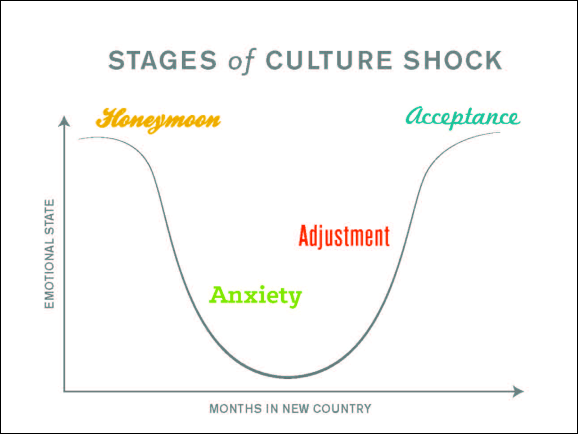
Just like the graphic at the beginning of this article shows, culture shock is a big wave of emotions. Understanding what happens at each stage of transitioning into a new culture will help you adapt much quicker.
Phase One: Honeymoon
This is a fun and exhilarating time when all is great, exciting, and new. You embrace the differences, go out of your way to try the weird and wonderful food, and enjoy meeting strange new people. This phase can last days, weeks, or months.
The world is an ever-changing and exciting place, full of opportunities and new experiences. There are always new cultures to explore, people to meet, and delicious food to try. This is a thrilling time where differences are embraced, pushing you out of your comfort zone and allowing you to experience something truly unique. It’s a period of time where you get out there and make the most of it!
Phase Two: Frustration and Anxiety
The honeymoon is over and the sparkle of your new home has worn off, now what? Anxiety and frustration. During this phase, you start observing differences, however slight, and not always in a good way. You’ve had enough of the food and miss the tastes and comforts of home. The local attitudes might annoy you, and it gets really easy to think that things are just so much better at home.
During this phase, you may feel sad, irritable, angry, or anxious. You’ll likely miss holidays from home such as Christmas or Thanksgiving, and feel sad when you miss out on some big events like birthday celebrations and weddings back home. Try to identify and move out of this phase as quickly as possible.
Phase Three: Adjustment
During this phase, you’ll have an option between deciding to give in to negativity or choosing to endure past it and make the most of your experience. You’ll learn what adjustments you need to make to be more comfortable in your new home. If you’re successful, you regain your sense of perspective, balance, and humor, and move on to the next phase. Which, in our opinion is the best one.
This phase might last a while. After all, adjusting takes time and not everyone is on the same timeline.
Phase Four: Acceptance
We like to call this phase the all’s well and everything’s okay phase. You’ll start feeling more at home with the differences in the new culture. After a while, you’ll likely experience a profound sense of belonging to your new home.
You may not exactly feel like you’re ‘part of the culture,’ but you’re comfortable enough with it to enjoy the differences and challenges that come with it. You don’t necessarily have to be in love with the new country (as you were in the honeymoon phase), but you can navigate it with ease and without unwarranted anxiety, negativity, and criticism.
Bonus Phase: Reverse Culture Shock
Just when you thought you were in the clear, you go back home and BAM, you’re hit with the culture shock cycle all over again. This happens to most people who have lived abroad for a while. Once you’ve become accustomed to the way things are done in a different country, you can go through the same series of culture shock phases when you return home. It’s completely normal and something you can also prepare for when you plan to return home.
Culture shock can present itself at any time, and it’s often the small things we feel the most – like navigating a grocery store with unfamiliar products in currencies we are not familiar with.
Working abroad has its own challenges, as aside from day-to-day cultural differences, there are also differences in the workplace. For example, if you are typically organized and punctual, you may struggle to adapt working to a culture with a more relaxed working environment. Or, if you’re a woman, you may find it difficult to adapt to a country where there is obvious gender inequality. It’s all about getting curious and finding ways to make yourself more comfortable in your new country and culture.
A TEFL Course Can Help You Smoothly Transition Into a New Place
If there’s anything you take away from this article, take this: it’s important to be patient – in time, things that once were strange will become normal. Be kind to yourself, and don’t place high expectations on yourself until you have adjusted to your new life. While moving to a new country is daunting in many ways, it can be equally rewarding, and if you never give it a try, you’ll never find out. And the best part is, you don’t have to do it alone.
Doing a TEFL course abroad is a great way to transition into a new, unfamiliar place and deal with culture shock when it happens. You will have a ‘soft landing’ with like-minded people in your TEFL course, and our TEFL courses in Bali, Bangkok, and Cambodia all include cultural immersion activities to help get you accustomed to the local way of life.
Understanding what culture shock is and how to successfully navigate its stages will help you deal with it – so will becoming part of the Destination TEFL family. I’m Rose-Anne Turner, the author of this article and Head of Admissions at Destination TEFL. I’d love to schedule a call with you and sit and chat about your concerns and how I can help make your move abroad to teach English as easy as possible. Chat soon!
